Your dog sees into the past

He's been standing with his nose in a tuft of grass for forty seconds. You give the lead a gentle tug. Come on, there's nothing there.
Oh yes, there is. There's a complete recording.
While you look at a tuft of grass and see grass, he reads who passed by there, which direction they went and roughly how long ago. It isn't a trainer's exaggeration. It's what the measurements show, and it's stranger than you imagined.
His nose isn't a better nose. It's a different device
When you breathe in, the same air goes to the lungs and, on the way, past the area that senses smell. In a dog, the airflow splits: one part goes to breathing, the other is sent into a dead-end pocket at the back of the nose, full of smell-sensing tissue, where it stays and builds up.
And there's something else, which was only seen when researchers rebuilt a dog's nose on a computer and made it breathe there: each nostril takes a separate sample. Not a single one, split in two. Two samples, from two slightly different places, which his brain compares.
Think about what that means. You locate a sound because it reaches one ear a fraction of a second before the other. He locates a smell the same way — by comparing what came in on the left with what came in on the right. That's why, when he picks something up, his head starts moving in a zigzag. It isn't agitation. He's triangulating.
And that quick, jerky sniffing, which seems nervous to you, is actually how the device works: every short inhalation is a new sample.
The difference between you and him isn't in the nose. It's in the genes
Smells are sensed by proteins called receptors, and each type of receptor is written by a gene. This family of genes is the largest in the entire mammalian genome — between nine hundred and one thousand four hundred genes.
Here's the interesting part: dogs and humans start from a family of comparable size. The difference is that, in humans, most of them have been switched off over the course of evolution — roughly seventy per cent of our smell genes are dead genes today. In dogs, they aren't.
So it isn't that he has an exotic organ we don't have. It's that we had the device and let it rust, and he didn't.
He actually has two noses. And he has half lost the second one
Besides the ordinary smell device, the dog has another one, hidden in the floor of the nasal cavity, just behind the front teeth. It's called the vomeronasal organ and it doesn't deal with the smells of the world, but with the chemical signals left by other dogs: who it was, what sex, in what state.
And here comes what is almost never said, because it spoils the nice story. The area of the brain that processes information from this organ is, in the dog, less developed than in the fox. This was seen by putting the two under the microscope, with the same methods, in a study of comparative anatomy. In the fox, the structure is clearly layered and rich. In the dog, it's visibly simpler.
The explanation the authors propose: domestication. Tens of thousands of years in which you no longer depend on reading chemical signals to find a mate or to avoid a rival, because humans have solved food, reproduction and territory for you.
In other words, your dog paid a price to stay by your side. On the pure smell side, it's an extraordinary device. On the side of chemical signals between dogs, he has lost something compared with his wild relatives.
The part that changes everything: he reads time
So far we've talked about how sensitive it is. Next comes what he does with that sensitivity, and this is the heart of it.
A smell left on the ground doesn't stay the same. It changes from the second it was left — it evaporates, it oxidises, it mixes with what's around it. That means a trail of footsteps isn't a row of identical points. It's a row of points that age progressively, each one a little older than the next.
A dog with the right nose for this can read the gradient. And exactly how much he needs has been measured.
In a study published in 2005, six dogs were put in front of a trail of twenty-one steps, left by the same person, wearing the same shoes, each step on a separate square of carpet. The dogs were brought in perpendicular to the trail, right in the middle — without having seen where it came from or where it was going. They had to choose the direction.
They chose correctly, significantly more often than would have happened by chance.
Then came the tests that show why it works.
When the researchers shuffled the order of the squares, keeping exactly the same steps, the dogs could no longer determine the direction. So they weren't smelling "stronger on one side". They were reading the order.
When they left the physical trail on the ground but removed the person's smell, the dogs could no longer do it. So they weren't following trampled grass. They were following the person.
And then they started shortening the trail. From twenty-one steps to eleven. Then nine. Then seven. Then five. Then three.
They succeeded with five steps. With three, they didn't.
Five human steps. That means, according to the authors' calculation, that somewhere around one to two seconds have to pass between two footprints for the smell to change enough for the difference to become readable for him.
Stay with that figure for a moment. Your dog can tell the difference between a smell that is ten seconds old and one that is twelve seconds old.
And the practical consequence is the one I find most beautiful. For you, a trail on the ground is a line. For him, it's a line with an arrow. That's why a tracking dog can be put on a trail in the middle and sent either forwards or backwards, towards the place the person started from. He isn't guessing and he isn't going on luck. He reads which way time is flowing on the ground.
How far this goes, when someone really trains it
If that seems like a lot, look where it gets to when the nose is seriously trained.
Diseases change a person's chemical make-up, and some of these substances end up in the air, in sweat, in breath. In recent years, teams all over the world have tried to see whether a dog can be trained to identify them. A review published in 2023 brought together twenty-seven studies from fifteen countries, on detecting a viral infection in humans.
And here come two things, because I want you to know exactly what ground you're standing on.
The first: of the twenty-seven, only four passed the strictest quality test. The rest had problems with method. I'm not telling you this to take anything away from the story, but because otherwise it would be a story, not a fact.
The second: in the four clean studies, the dogs correctly identified infected people in eighty-one to ninety-seven per cent of cases, and uninfected people in ninety-one to one hundred per cent.
An animal that sits next to you on the sofa can be trained to sense, in the air a person breathes out, the chemical sign of a disease. The authors' conclusion isn't that we should replace tests with dogs, but that the potential is real and it lacks what explosives detection already has: standardisation and certification.
Why he waits for you at the door ten minutes before you arrive
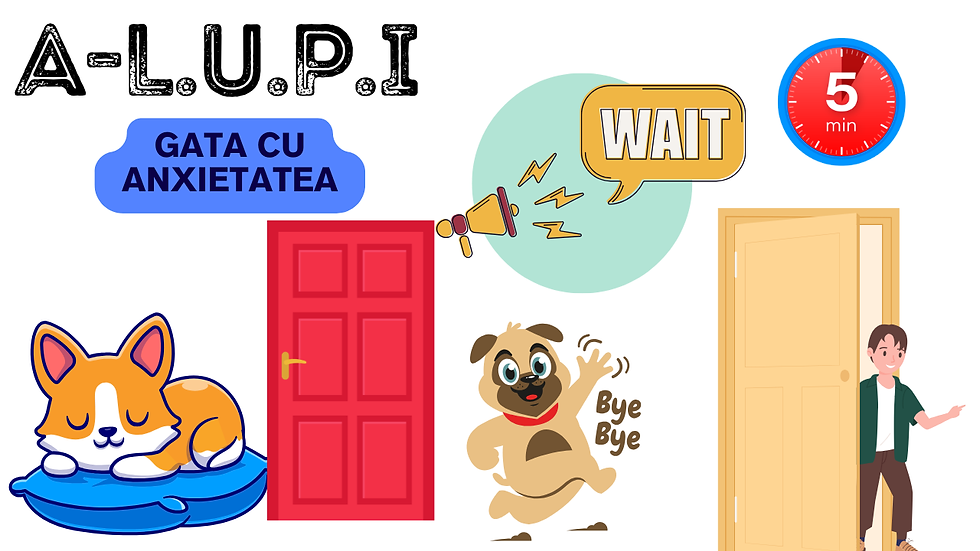
Almost everyone who has a dog has noticed this and almost everyone explains it wrongly. "He knows the time." He doesn't know the time. He doesn't have a clock and he doesn't have the concept of five in the afternoon.
Here's the explanation that fits everything you've read so far. When you leave home in the morning, you leave your smell behind, at full intensity. From the second you close the door, that smell starts to thin out — it settles, it disperses, it mixes with the air coming in under the door. It decreases steadily, hour after hour, at the same rate, every day.
Your dog spends the whole day inside this decrease. And, after a few weeks, he learns the link: not that it's five o'clock, but that when about this much of your smell is left, you appear at the door.
He doesn't count the hours. He reads how much of you has been used up in the house. His clock isn't on the wall, it's in the air.
And now the scientifically correct part, because I don't want to sell you a nice story as fact. Nobody has yet measured this directly in an experiment. What has been measured, and you saw it above, is the mechanism that makes it possible: smell ages in a regular way, and the dog reads differences in ageing of the order of seconds. If he can tell the difference between a ten-second-old trail and a twelve-second-old one, a difference of eight hours in the concentration of your smell in a closed house is, for his nose, a huge figure.
So: the explanation is the most plausible one we have, built on a demonstrated mechanism. It isn't yet a laboratory result. I'm telling you as it is.
That's why he stops. And that's why it isn't a waste of time
Now reread the scene at the beginning. You see a tuft of grass and a dog that freezes for no reason. He has a sentence in front of him: a male passed by here, about two hours ago, he was going that way, he was agitated, and before him a female had passed.
When you jerk him by the lead at second twenty, you interrupt him in the middle of the sentence.
I'm not saying he should stop anywhere, for as long as he likes. The walk has a framework, and you're the one who sets the framework. I'm just saying you should know what you're stopping when you stop it.
And now the part that concerns you
Here it's easy to conclude that humans are disabled when it comes to smell. That isn't true, and it's worth saying, because it's an error with a history.
The idea that humans have a poor sense of smell doesn't come from measurements. It comes from a nineteenth-century anatomist who assumed that, for humans to have free will, the area of the brain that processes smell must have shrunk proportionally. It was a philosophical hypothesis, not a result. And it stayed in the textbooks for a hundred and fifty years.
The reality: the human olfactory bulb is, in absolute terms, quite large and contains a number of neurons comparable with that of other mammals. Humans can distinguish a huge number of smells. For some substances we are more sensitive than mice and than dogs. And humans can, under laboratory conditions, follow a scent trail on the ground.
So we aren't blind to smell. We're just untrained, and our nose is a metre seventy above the ground, not twenty centimetres.
But here's where smell works in us, and this is where you can best see how deeply it's linked to time and emotion. When older people were asked to recall a memory starting from either a word, an image or a smell, the memories called up by smell were consistently older than the others. Those triggered by words and images clustered in adolescence and early adulthood. Those triggered by smell clustered in the first decade of life — before the age of ten. And they came with a stronger feeling of being taken back in time, plus a greater emotional charge.
There's a symmetry here, and it's only honest to say exactly where it stops. He uses smell to read the past of the world around him. We use it to go back into our own past. We both travel in time through the nose, but not in the same direction and not for the same purpose. His is a tool for finding his way in the present. Ours is a door to childhood. It isn't the same thing, and we shouldn't confuse the two.
Two completely different things that people mix up
Before any exercise, it has to be clear what we're talking about. There are two things, and one doesn't replace the other.
One: the walk on the lead. It's a structured outing, with rules, in which you lead. It isn't sniffing time.
Two: scent exercises. They're done at home, in the yard or in the house, off the lead, for a short time and with a clear purpose.
What you see most often on the street is neither of the two. It's a person being pulled along by a dog that stops at every tuft, sniffs non-stop, pulls them on, stops again. That's neither a walk nor a scent exercise. It's chaos, and it tires them both out without solving anything. The dog doesn't relax, because he decides everything and carries all the responsibility. And the person gets home convinced they've done something good.
What a correct walk on the lead looks like
For eighty per cent of the walk, the dog walks at a steady pace, next to your leg. No tension on the lead, no zigzag, no stopping at every step. You set the pace and the direction.
For twenty per cent, he's free, with his nose down. Here he sniffs as much as he wants, within the time you give him.
That twenty per cent isn't given in a single block. It's split into four or five short spells, spread over the whole length of the walk. This matters more than the percentage itself: the dog learns that the windows come, that he doesn't have to fight for them, and that they also close. This on-off rhythm is the lesson itself.
The walk lasts at least forty-five minutes. Any less and you don't manage either to get into the rhythm or to do the spells properly.
And it covers at least two kilometres: one kilometre out, one kilometre back. Not repeated laps around the block. The difference isn't about sport, it's about information: on a route that goes somewhere, the smells change all the way. Around the block, after the third lap, there's nothing new left to read, and the walk becomes empty physical exercise.
That's the framework. Inside it, sniffing is a privilege you grant, not a negotiation you lose.
What you do at home this week
Here I have to tell you something you'll rarely find written down, because it spoils a slogan.
Scent searching doesn't calm him. It activates him. In March 2026 a study was published on twenty-one companion dogs, fitted with an electrocardiograph, which did five minutes of searching and, on another day, five minutes of walking in a neutral room. Heart rate rose in both situations compared with rest, but most of all during the search: one hundred and thirty beats per minute, compared with one hundred and twenty-two during the walk.
And now the part that matters, because activation isn't the same thing as stress. In the same dogs, heart rate variability didn't get worse, even though the authors expected it to. No dog showed stress behaviours during the search. The tail stayed up longer than during the walk, and panting lasted longer during the control walk, not during the search. Afterwards, the pulse came down just as quickly in both cases. The authors' conclusion, word for word: physiological activation, without clear evidence of stress.
So you're not giving him a sedative. You're giving him work. A dog that is searching is a dog that is switched on, content and focused, not a relaxed one — and that difference changes when you do the exercise and how long it lasts.
There's something else to say, again in the name of honesty. The idea that nosework makes dogs more optimistic comes from a 2019 study. A 2026 study tried to repeat the result and didn't find it: no improvement compared with an ordinary training class, although the owners reported a better quality of life. Remember this pattern: what people feel about the activity is, for now, clearer than what the instruments show.
A seven-day programme, without buying anything
Days 1-2. Sitting at the gate
This isn't a walk and it doesn't replace the walk. It's something else, and it's the simplest thing in the whole programme.
Go out with him to the gate, or in front of the door of your block of flats, on the lead. And stay there. Fifteen minutes. You don't go anywhere. You don't give commands, you don't talk to him, you don't call him, you don't look at your phone to make the time go faster. You stay, exactly as old women in the villages used to sit in front of the gate, watching the road.
He doesn't have to do anything. He sits or stands, as he likes, and he works. The air brings him everything: the neighbour who went by ten minutes ago, the car that parked, the cat under the fence, the dog that passed this morning and that he has never seen. You see an empty street. He receives the neighbourhood news bulletin, live.
Why this one comes first: it's the only exercise in the programme in which his nose works at full capacity, because he isn't making any physical effort. He isn't pulling, he isn't running, he isn't panting, he has no navigation decisions to make. He doesn't argue with you about the direction, because there is no direction. Only the information remains.
What to watch for: for the first two or three minutes he'll be restless and pull towards the street, because he expects you to set off. When he sits down on his own, without you asking, you've seen exactly the moment he understood that you're not going anywhere. By the second or third repetition it comes much faster.
Days 3-4. The little metal tins
This is the exercise that changes the relationship between the two of you the most, and that's exactly why it's worth doing exactly as written.
You need three small metal tins with lids, in which you make a few holes. The kind that mints or tea are sold in. The holes let the smell out, but don't let the dog get at what's inside. That's the whole secret.
You put something tasty in just one of them, close all three, hide them around the room and let him search. He'll find it. And this is where the important thing happens: he finds it, but he can't solve it on his own. He can't open the tin. He can sniff it, push it with his muzzle, look at it. Nothing works.
What does he do then? He turns towards you. Or he stays by the tin and waits for you. Or he brings it to your hand. Any of the three is exactly the right answer, and that's what you reward: you come over, open the tin and give him what's inside.
The lesson he learns, without you saying a word: finding is only half the job. The other half is you. He isn't a dog that hunts alone and lets you know afterwards. He's a dog that works with you.
That's also why the metal tin beats the cardboard box: with cardboard, he tears it and helps himself. He doesn't need you and, on top of that, he learns that tearing solves problems. With metal, the only way to the reward goes through your hand.
Three short rules: the tins should be big enough that they can't be swallowed and have no sharp edges; stay in the room while he's working, don't leave him alone with them; and if he starts chewing them insistently, stop and come back the next day with bigger tins.
Three repetitions, then a break. When he solves it first time every time, hide them harder or move the exercise to another room.
Days 5-6. The snuffle mat
The simplest exercise in the whole programme and the only one you can do endlessly, without either of you getting bored.
It's sold as such, a little mat with strips of fabric among which food is hidden. But you don't need to buy anything: a cardboard box filled with balls of paper does exactly the same job. You crumple ten or fifteen sheets, throw them in the box, sprinkle a handful of kibble from his food among them, and let him at it.
You don't have to understand anything, you don't have to hide anything, you don't have to time anything. He puts his nose in and works. Five to ten minutes, that's all.
Why it's worth it: food given from a bowl is eaten in ninety seconds and asks nothing of him. The same amount, hidden among balls of paper, gives him ten minutes of real work with the one organ he has most developed.
Two things to watch: if he eats the paper instead of pushing it aside, make the balls bigger and stay next to him. And don't leave the box within reach between exercises, otherwise it becomes a toy and loses its value.
Day 7. Nothing new. You repeat what he liked most. Ten minutes. Watch him afterwards: if he lies down and sleeps deeply, that's a good sign, not a sign that you've tired him out too much.
If it doesn't work the first time: the most common reason is that you helped him. Pointing with your finger, "look, over there", staring at the right tin — all of it teaches him to read you instead of searching on his own, because you're the cheaper option. The second reason, just as common: you made the exercise too hard too fast. If he failed twice in a row, the last version was too hard; go back to the one before and stop on a success.
How often: five times a week is better than every day. You want it to stay something he can't wait for, not something he does out of obligation.
When, during the day — the rule almost nobody mentions. Searching is done before physical exercise, not after. A study of dogs working on a treadmill showed that, at moderate-intensity exertion, the nose's performance drops sharply after twenty-one minutes, and the culprits are the intensity and duration of the exertion, not body temperature or pulse. In other words: if you take him out running for an hour and then give him the tins, you're giving him a task with the device already tired.
How long: short. In the electrocardiograph study, the dogs found three hiding places in three and a half minutes on average, and the session lasted five minutes. Ten minutes is a ceiling, not a target. If you want more, do two short sessions on different days, not one long one.
You don't need more. Fifteen minutes of searching tires a dog out more, and more healthily, than half an hour of running after a ball.
What makes it worse
The two extremes, and both do damage. The first: a short lead held constantly under tension, with no window at all. A dog that can never lower his head can't smell, so you've cut off the channel through which he understands where he is. The second, more common and harder to recognise because it looks like kindness: the walk in which the dog sniffs non-stop and drags you from tuft to tuft. There you haven't given him freedom, you've given him the steering wheel. The structure above, eighty-twenty in four or five spells, is exactly the path between the two.
Aggressive cleaning of his things. His bed washed with something strong-smelling, scented toys, disinfectant poured into his kennel — for you it means clean, for him it means you've wiped his room. Warm water and a neutral detergent do the job without wiping out his landmarks.
Hurrying. Most jerks on the lead happen exactly in the seconds when he's gathering information. If you're in a hurry, shorten the walk, not the sniffing. A ten-minute walk in which he got to sniff is worth more than a thirty-minute one in which he was dragged along.
The same route, over and over. A route you've been doing for two years has as many new smells as a corridor you walk down every day has for you. You don't have to change cities; one extra street, a patch of grass you haven't stepped on before, a different time of day, and the information changes completely.
One last thing
Next time he stops and you feel the urge to pull, ask yourself for a second who passed by there and where they were going. You'll never know. He already knows.
And since you've read this far, don't take my word for it. Take three little tins with holes, put something tasty in one and watch him work. In five minutes you'll see with your own eyes everything written above.
If you want to understand why everything you've read here works, the first step is KNESsence, the free material in which I've put the essence of the system we work by at KNES. Create an account on knes.ro, you'll get a six-digit code by email and go straight to it.
With care for your dog,
Petre ROMAN
This material is for educational purposes and does not replace a consultation with a veterinarian or with your own doctor. If you have a concern about your health or your dog's health, see a specialist.

Comments